Evaluating the Meadow Font Embroidery Design
In the realm of machine embroidery, typography serves as a critical tool for personalization. The Meadow Font Embroidery Design represents a specific category of digital assets designed to transform standard text into decorative stitched elements. This resource is intended for crafters and professionals seeking to add names, dates, or short quotes to various textile projects. Understanding the capabilities, limitations, and technical specifications of this font is essential for determining its suitability for specific applications.
Understanding the Design Structure
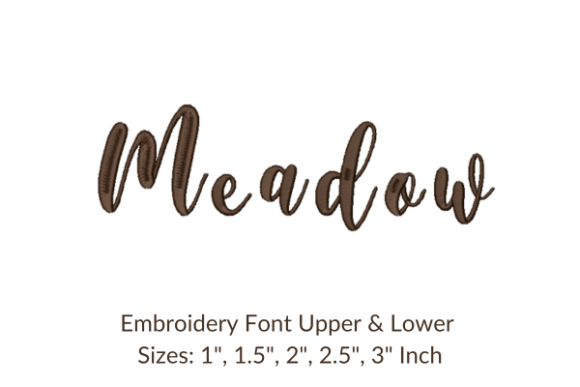
The Meadow Font Embroidery Design is not merely a collection of letters; it is a comprehensive set of digitized patterns that mimic the aesthetic of hand-stitched or stylized script. Unlike standard block fonts often found in basic machine libraries, this design emphasizes flow and organic shapes, likely inspired by natural motifs. The "Meadow" designation suggests a style that may incorporate curves, varying stroke widths, or floral-inspired terminals, making it distinct from rigid sans-serif options.
It is important to note that the dimensions provided in product summaries typically reference the letter "A" (uppercase) and "a" (lowercase). These metrics serve as a baseline for estimating the space required on a hoop. However, the actual file contains 270 individual characters, including uppercase letters, lowercase letters, numbers, and potentially punctuation marks. Because each character in a cursive or stylized font can vary significantly in width and height, relying solely on the "A" measurement can lead to sizing errors. For precise planning, users are encouraged to consult the detailed PDF documentation available with the download, which outlines the full dimensional data for every character in the set.
Reasons to Consider This Font
Crafters often seek the Meadow Font Embroidery Design when they require a balance between legibility and artistic flair. There are several practical scenarios where this specific style offers advantages:
- Personalized Gifts: Adding a name to a baby blanket, a monogram to a towel, or a date to a wedding pillow requires a font that feels special. The stylistic nature of the Meadow font elevates these items beyond simple text application.
- Textile Branding: Small businesses creating apparel or accessories may find this font suitable for logos or tag labels where a softer, more approachable brand image is desired.
- Decorative Accents: When the primary focus of a project is a large motif, such as a floral arrangement, a delicate script font can complement the imagery without competing for visual attention.
The versatility of the file formats included in the package is another significant factor. Since the design comes in multiple industry-standard formats, it ensures compatibility with a wide range of embroidery machines, from domestic hobbyist models to commercial units. This flexibility reduces the barrier to entry for users who may not have access to proprietary software conversion tools.
Benefits and Tradeoffs
Adopting the Meadow Font Embroidery Design offers clear benefits regarding customization and workflow efficiency. By having pre-digitized characters, users save the considerable time and technical skill required to create custom lettering from scratch. The consistent stitch density and underlay structures inherent in professional digitizing ensure that the fabric does not pucker excessively, even on delicate materials like linen or cotton blends.
However, there are tradeoffs to consider. Stylized fonts often require more stitches than basic fonts to achieve their shape, which increases the run time of the machine. Additionally, intricate details in the letterforms may demand higher thread quality and precise tension settings to prevent breakage or fraying. Users must also be mindful of the fabric choice; highly textured fabrics might obscure the fine details of the Meadow font, rendering the design less effective.
A critical consideration is the spacing between characters. In many script fonts, letters connect or overlap. If the user's software does not handle kerning automatically, manual adjustment may be necessary to ensure the final result looks cohesive. The summary information provided for the "A" and "a" sizes is useful, but it does not account for the unique width of characters like "m," "w," or "j." Therefore, testing a sample phrase before committing to a final garment is a prudent step.
Situations Where It Is a Strong Fit
The Meadow Font Embroidery Design excels in situations where the project allows for moderate complexity and the fabric provides a smooth surface. It is particularly well-suited for:
- Lightweight Cottons and Linens: These fabrics hold the stitch detail well and allow the fluid lines of the font to stand out.
- Small to Medium Scale Projects: Items like tote bags, napkins, and clothing patches benefit from the font's decorative qualities without overwhelming the design area.
- Projects Requiring Multiple Formats: Since the download includes various file types, it is ideal for workshops or home studios that utilize different brands of embroidery machines.
If the goal is to create a heirloom-quality piece where the text is a focal point, this font provides the necessary aesthetic depth. The ability to mix and match characters allows for creative layout possibilities, such as centering a name above a date or curving text along an edge.
When Alternatives May Be Preferable
Despite its strengths, the Meadow Font Embroidery Design may not be the optimal choice for every scenario. There are specific contexts where alternative fonts or methods should be considered:
- High-Visibility Safety Gear: For workwear or safety vests where legibility is paramount, a bold, sans-serif font is superior. The decorative elements of the Meadow font could reduce readability at a distance.
- Very Dense Fabrics: On thick fleece or heavy canvas, the fine details of a script font may get lost. A simpler, thicker font with fewer stitch counts would perform better on these materials.
- Long Text Passages: While excellent for names and short quotes, using a complex script font for long sentences can become visually cluttered and difficult to read. In such cases, a simpler body text font is more appropriate.
Furthermore, if a user requires extensive customization of the letter shapes—such as adding specific embellishments to every single character—a static font file may be too limiting. In those instances, starting with a vector graphic and digitizing it manually might offer greater creative control, albeit at the cost of time and expertise.
Practical Decision-Making Insights
Before integrating the Meadow Font Embroidery Design into a workflow, potential users should evaluate their specific project requirements against the font's characteristics. First, verify the hoop size constraints. Even though the file supports various sizes, the physical limits of the embroidery machine dictate the maximum width of the text. Second, review the stitch count estimates. If a project has a strict deadline, a high-stitch-count font might delay production.
It is also advisable to download the preview files or test samples if available. Stitching a test swatch on the exact fabric intended for the final project reveals how the thread interacts with the material and whether the color choices complement the design. Finally, always cross-reference the detailed dimension PDF. Relying on the summary data for "A" and "a" is a starting point, but accurate layout planning requires the full dataset for all 270 characters.
Ultimately, the decision to use this embroidery font depends on the alignment between the desired aesthetic and the technical constraints of the project. For those seeking a blend of elegance and functionality for personalized textile work, the Meadow Font Embroidery Design presents a viable and efficient solution. However, for applications demanding maximum legibility or extreme simplicity, other typographic options may serve the end goal more effectively.